

SEO, AEO and GEO: What's the Real Difference in 2026?
New acronyms keep landing in marketing inboxes. SEO you know. Then came AEO. Now everyone is talking about GEO. Some people use them interchangeably. Others make them sound far more complicated than they need to be.
Here is the plain version: what each one actually does, how they differ, and why the difference matters more for South African businesses than most realise.
First, what has actually changed
People do not only search anymore. They ask. And more often than not, the answer arrives before they click anything.
The numbers tell the story. Roughly two thirds of Google searches now end without anyone clicking through to a website (SparkToro, 2026). Google's AI Overviews appear on more than a fifth of searches, and when they do, click-through rates to the listed pages fall by close to 60%. Google's conversational AI Mode passed one billion monthly users in 2026, and ChatGPT now serves over 800 million people a week.
This is not a far-off shift, and it is not only a Silicon Valley problem. South Africa was the leading user of generative AI tools in Africa in early 2026, with close to a quarter of working-age adults using tools like ChatGPT and Gemini (Microsoft, 2026).
Your customers are already asking AI for recommendations. The only real question is whether your brand is in the answer.
That backdrop is why three different optimisation disciplines now exist. They are related, but they are not the same thing.
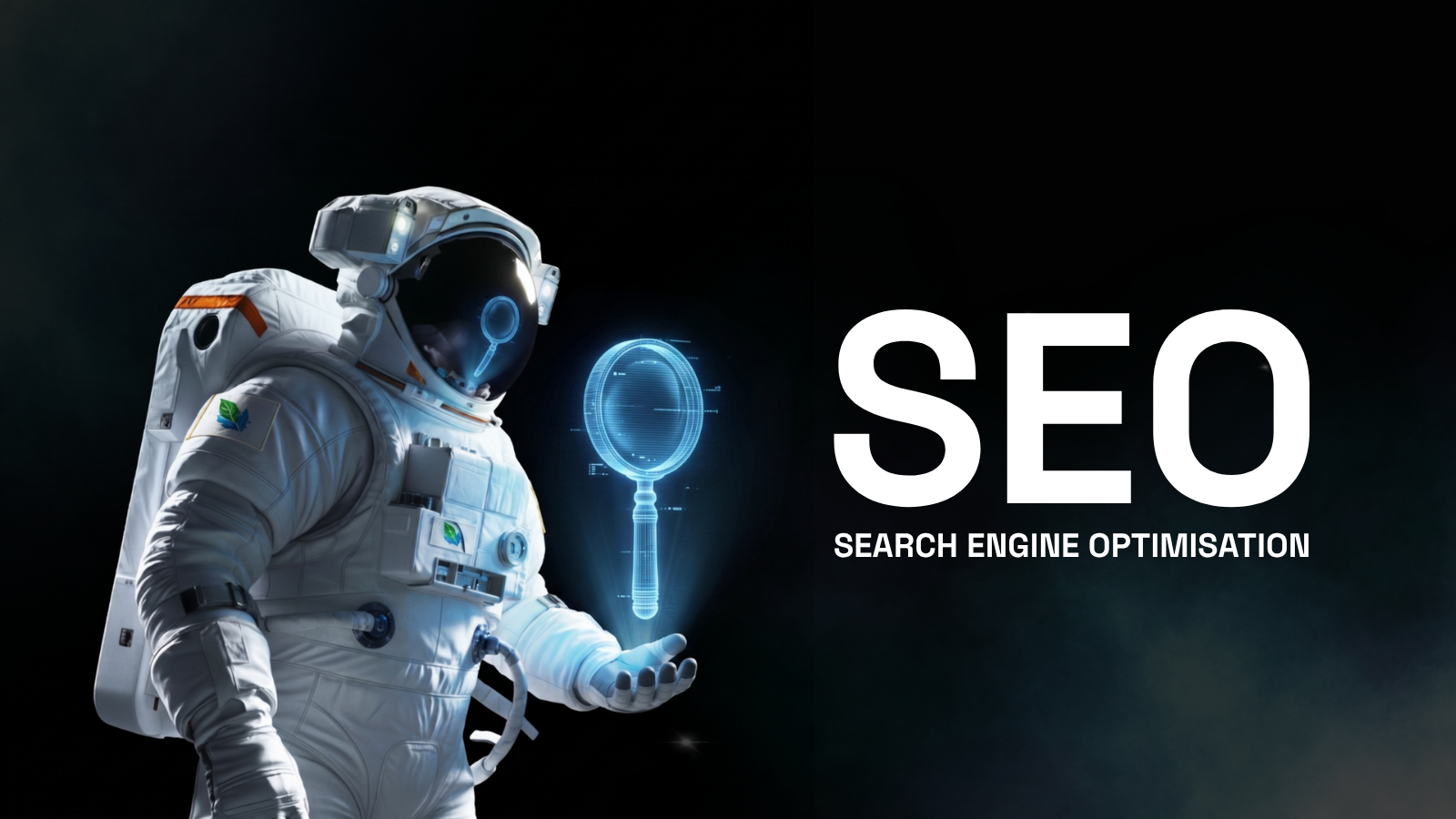
SEO: getting found
Search Engine Optimisation is the original, and it has not gone anywhere. It is the work of ranking your pages in the standard results of search engines like Google.
It rests on three things: technical health (a fast, crawlable, well-built site), relevant on-page content (matching what people actually search for), and authority (earning the links and mentions that signal you can be trusted). SEO still captures the largest share of high-intent, ready-to-buy searches, and it remains the base layer everything else is built on. What has changed is how much of the results page those blue links now occupy.
The goal of SEO, in one line: rank the page and earn the click.
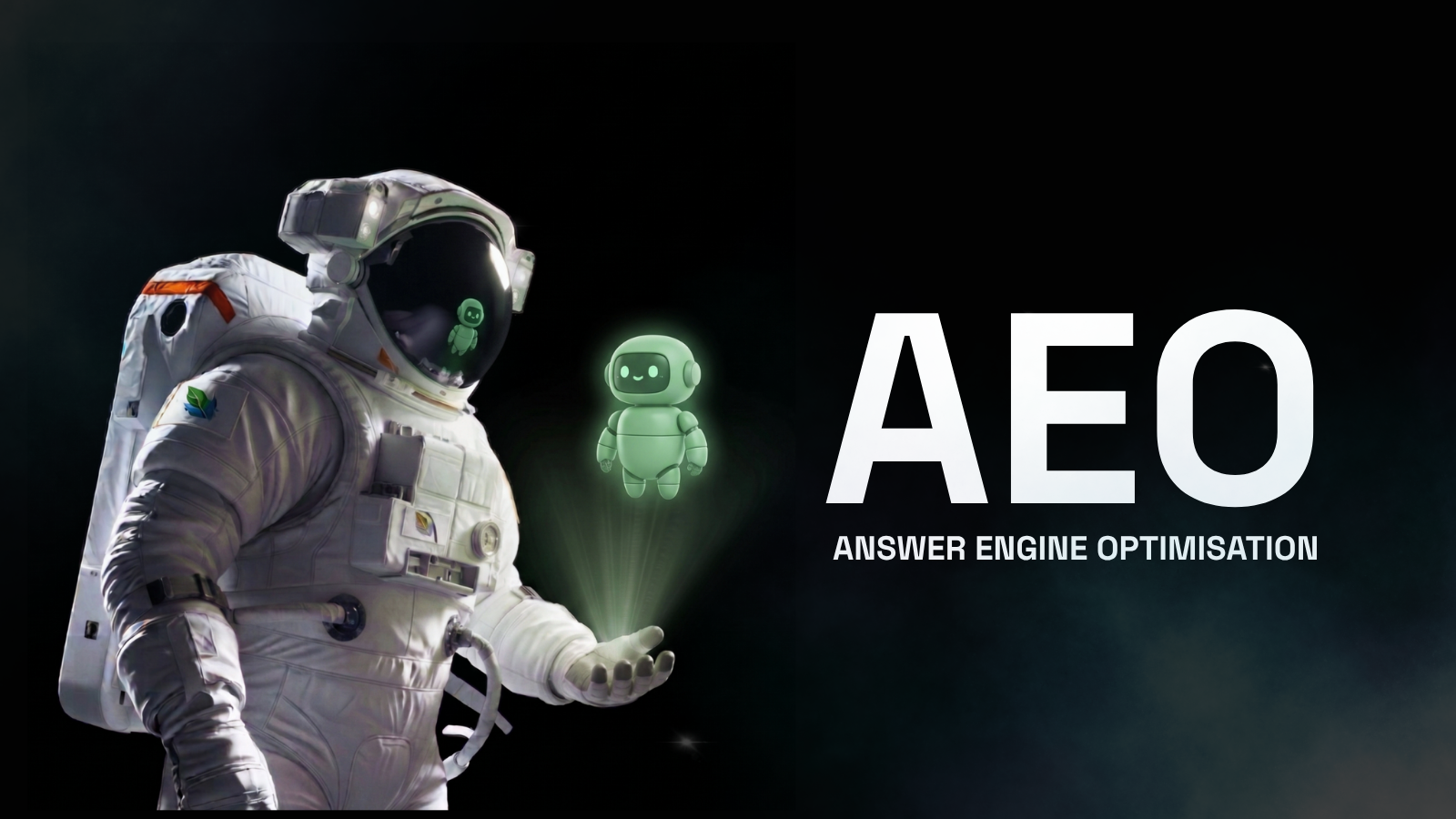
AEO: being the answer
Answer Engine Optimisation is older than the current AI hype suggests. The term took shape around 2017 to 2019, back when "Hey Siri" and Google's featured snippets were the new thing. The idea was simple: structure your content so a search engine could lift a clean answer straight out of it.
That same idea now stretches to AI Overviews and voice results. You win by being the answer that gets pulled out and shown directly, usually right at the top of the page. The tactics are practical: clear question-led headings that match how people actually ask, a direct answer placed immediately underneath, and structured data that helps machines read your content properly.
The catch is that being the answer often means no click at all. The searcher gets what they need on the page itself. That is useful for visibility, but less useful if you were counting on the traffic.
The goal of AEO, in one line: be the answer that gets picked.
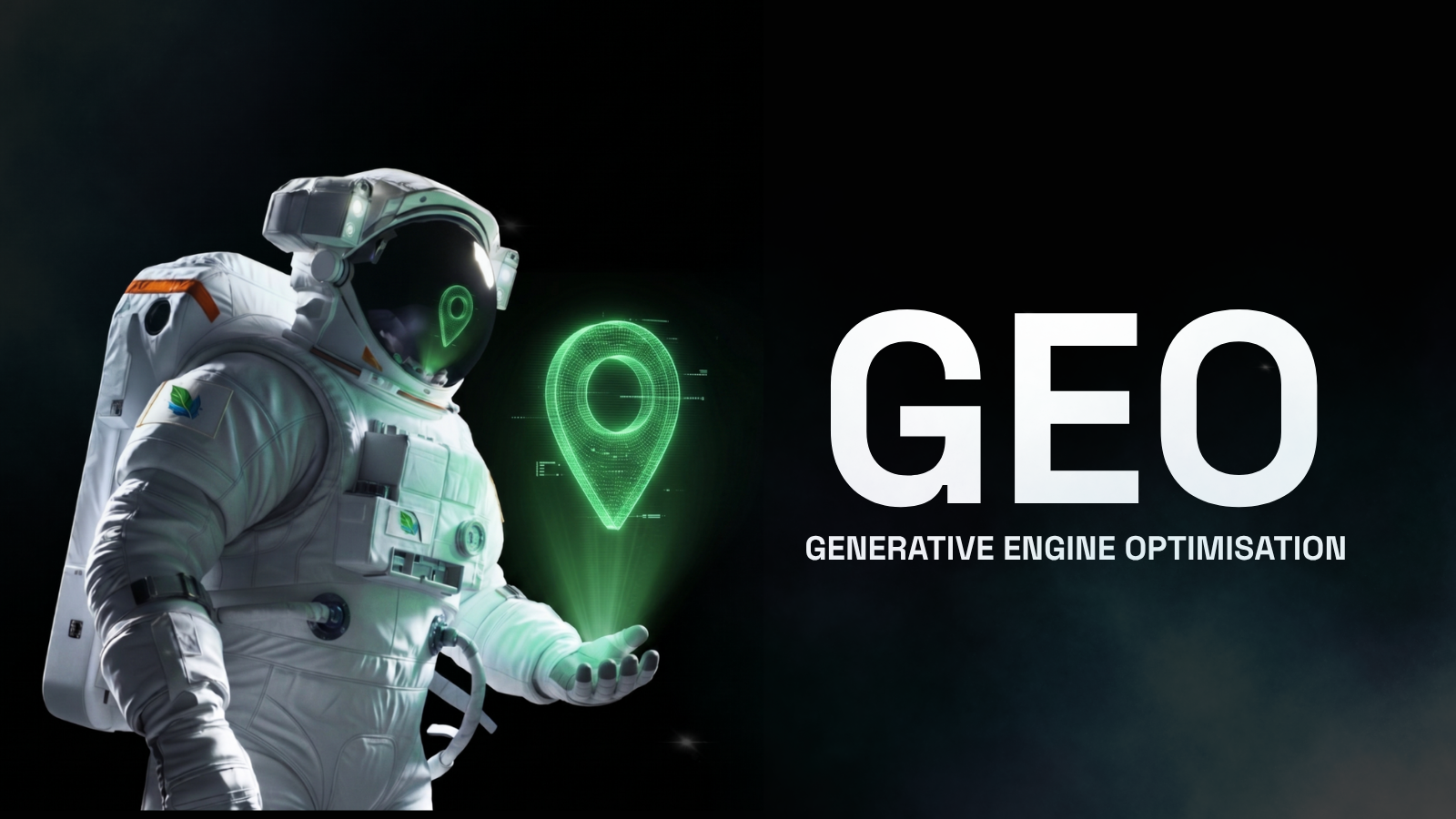
GEO: being the source the AI trusts
Generative Engine Optimisation is the newest of the three, and the one causing the most confusion. It was first defined in a 2023 research paper from a team at Princeton, Georgia Tech, the Allen Institute for AI and IIT Delhi, and it went properly mainstream in mid-2025 when venture firm Andreessen Horowitz published its "GEO over SEO" thesis.
The distinction is real. A generative engine like ChatGPT, Gemini, Perplexity or Google's AI Mode does not just hand you a single page. It reads across many sources, blends them, and writes a fresh answer, often naming the sources it leaned on. GEO is the work of becoming one of those named, trusted sources.
As Andreessen Horowitz put it, traditional search was built on links, but GEO is built on language. The signals that matter shift accordingly: consistent authority across the web, third-party mentions, reviews and editorial coverage, clear facts and original data, and a brand identity that AI systems can recognise and place. That same 2023 research paper found that adding credible statistics and citations to your content could lift its visibility in AI answers by up to 40%.
The goal of GEO, in one line: be the source the answer is built from.
So what is the real difference?
Strip away the jargon and it comes down to what you are optimising for:
| What's the difference | SEO | AEO | GEO |
|---|---|---|---|
| Where it shows up | The list of links | The answer box and AI Overviews | ChatGPT, Gemini, Perplexity, AI Mode |
| What you want | To rank | To be the answer | To be cited |
| How it works | Crawl and rank | Extract | Synthesise and cite |
| The win | A click to your site | The top answer (often no click) | Your brand named in the answer |
Now the honest part, because most explanations skip it. AEO and GEO overlap heavily in practice, and the industry is genuinely split on whether they are even separate disciplines. Much of the underlying work, clear writing, sound structure and real authority, serves both.
What differs is where you show up, the signals that get you there, and how you measure success. So do not get stuck arguing definitions. The mechanics matter far more than the acronym.
What this means for your business
You do not pick one of these. You layer them, which is exactly how a holistic strategy is supposed to work.
SEO is your foundation. A fast, trustworthy, well-structured site is the upstream filter for everything else, including whether an AI bothers to cite you at all. AEO is the on-page discipline that makes your content clean and easy to lift. GEO is the off-page authority work that gets AI engines to recognise and recommend you by name.
In our experience, the foundation and the on-page side are usually in reasonable shape for South African businesses. The gap is almost always the off-page authority that GEO depends on: the third-party mentions, local directories, reviews and credible coverage that AI engines actually pull from. That is where the biggest visibility gains are sitting right now, and where most of your competitors are not yet looking.
The acronyms will keep multiplying. The principle underneath them will not: be the brand the answer is built from, on every surface your customers use to look.
If you want to see how your brand currently shows up across Google, ChatGPT and Gemini, that is exactly where a proper GEO audit begins.
Sources
Zero-click searches and AI Overview click-through rates: SparkToro 2026 study ("In 2026, Less Than One Third of Google Searches Still Send a Click"), reported by Search Engine Land, June 2026. https://searchengineland.com/google-zero-click-searches-2026-study-479717
Google AI Mode passing one billion monthly users: announced at Google I/O 2026 (covered in the Search Engine Land report above).
ChatGPT weekly active users (900 million): "ChatGPT reaches 900M weekly active users," TechCrunch, February 2026. https://techcrunch.com/2026/02/27/chatgpt-reaches-900m-weekly-active-users
South African generative AI adoption (Africa's leading user, 23.1% of working-age adults, Q1 2026): Microsoft generative AI adoption report, reported by Ecofin Agency, May 2026. https://www.ecofinagency.com/news/2205-55838-south-africa-tops-african-generative-ai-adoption-rankings-in-2026-microsoft-report
Origin and definition of GEO, and the finding on statistics and citations lifting AI visibility by up to 40%: Aggarwal et al., "GEO: Generative Engine Optimization," 2023 (arXiv), presented at the ACM SIGKDD Conference (KDD 2024). https://arxiv.org/abs/2311.09735
The "GEO over SEO" thesis and the "built on links / built on language" framing: "How Generative Engine Optimization (GEO) Rewrites the Rules of Search," Andreessen Horowitz, June 2025. https://a16z.com/geo-over-seo/